Complete History of Sultanwas, Buner
A complete historical account of Sultanwas during the 2009 Buner conflict, preserving the full record of militant occupation, the locally organised Qaumi Lashkar, the joint organisational roles of Jehan Zeb Khan and Abdur Rasheed Khan, police cooperation, Operation Black Thunderstorm, displacement, reconstruction and long-term institutional lessons.
Strategic Context and the Fall of Buner
Militants operating under the leadership structure associated with Mullah Fazlullah and senior commander Ibn Amin moved into Buner through the mountain passes from Swat. Contemporary estimates placed the invading force at several hundred heavily armed fighters.
The advance brought militant formations to within roughly 60 miles of Islamabad, alarming both Pakistani authorities and international observers. The development was especially significant because it exposed the fragility of the Malakand Peace Accord, which had attempted to exchange judicial concessions for militant de-escalation.
Estimated strength of the broader militant force entering Buner.
Approximate distance from the militant advance to Islamabad.
Sultanwas became the principal militant command and supply centre in Buner.
In Sultanwas, civilian compounds were converted into bunkers and firing positions. Weapons caches were established, illegal checkpoints restricted movement and local administration was effectively displaced by militant control.
Jehan Zeb Khan, Abdur Rasheed Khan and the Formation of the Local Qaumi Lashkar
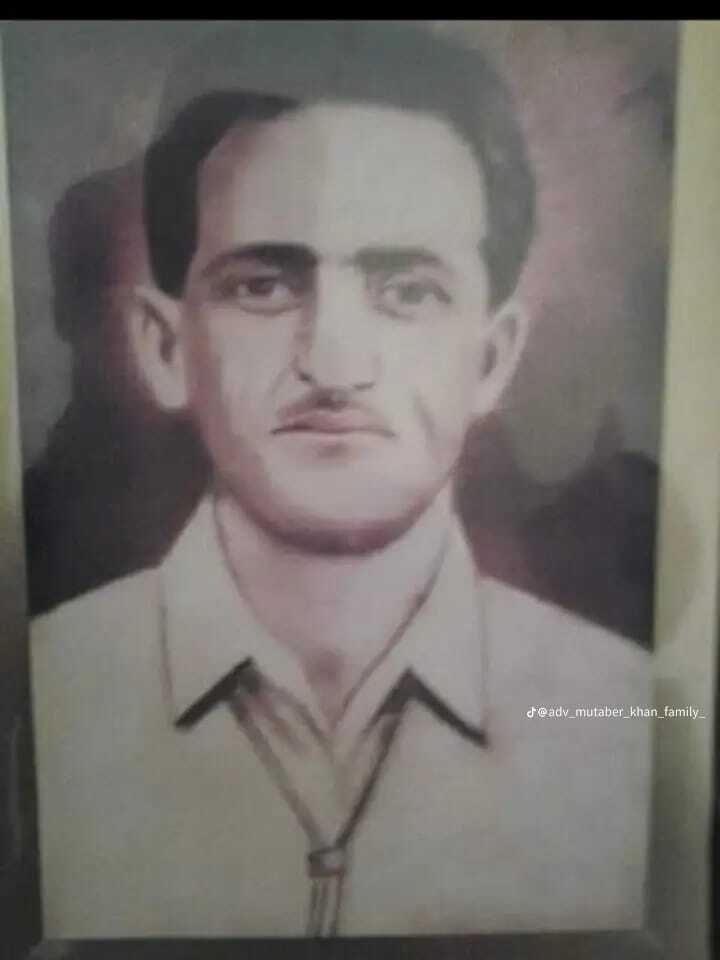
According to the Sultanwas family and local oral historical record, Jehan Zeb Khan and his younger brother Abdur Rasheed Khan were among the leading figures in forming and organising the village’s local Qaumi Lashkar before regular military forces had fully secured the area.
Their roles were complementary. Jehan Zeb Khan helped gather elders, volunteers and household networks through jirga traditions and collective responsibility, while Abdur Rasheed Khan was closely associated with active civilian defence, route monitoring, intelligence sharing and later public-facing leadership.
The local defenders coordinated with police personnel and other anti-militant groups. As these community and official security efforts came together, they formed part of the wider resistance structure commonly described as the Qaumi Lashkar, whose purpose was to resist Taliban control, protect civilians and preserve village authority.
The Sultanwas resistance drew on recognised local leadership, village consultation and cooperation with police. It was not a random or anonymous reaction.
Indigenous Resistance: The Sultanwas Qaumi Lashkar
Before regular army formations arrived, local Pashtun leaders attempted to resist the militant occupation through traditional mechanisms of collective defence. Tribal elders understood that the new militant order threatened land rights, village autonomy, jirga authority and the established social structure of Buner.
Local leaders therefore mobilised a qaumi lashkar , a civilian tribal militia, and organised peace committees to defend roads, homes and village approaches.
Relied mainly on personal rifles, light firearms, local knowledge and rooftop guard positions.
Used automatic weapons, RPGs, mortars, IEDs, sniper positions and coordinated battlefield communications.
Protect families, land, roads and the traditional authority of the village.
Establish a durable command base and expand control across Buner.
Local elder Abdur Rasheed Khan was among the organisers associated with the Sultanwas resistance. Volunteers guarded entry points, established rooftop posts and patrolled the village perimeter.
The local defence was eventually overwhelmed. District police and Frontier Constabulary personnel were also outgunned, and security officers at the nearby Pir Baba police station were captured. After defeating the civilian resistance, militants targeted the homes of prominent elders and further consolidated Sultanwas as a launch point for regional operations.
Within this broader resistance, Jehan Zeb Khan is remembered in the supplied family account as a leading organiser of the local lashkar, while Abdur Rasheed Khan became closely associated with active civilian defence, public advocacy and later peace-building. Their contributions were complementary rather than competing.
Clarifying Regional Leadership and Historical Identities
The historical record contains several individuals with similar names. Clear disambiguation is therefore essential when discussing civilian leadership, law-enforcement command and the wider history of the Malakand region.
The Sultanwas elder was a long-standing resident and community leader associated with local civilian resistance. His family compound, constructed in 1994, was destroyed during the militant occupation and subsequent fighting. He was later awarded the Tamgha-i-Shujaat for civil courage and gallantry.
The District Police Officer was a separate person. His role centred on police operations, security coordination, personnel recovery and post-conflict engagement with tribal jirgas and district administrators.
Jehan Zeb Khan was a long-standing resident and head of household in Sultanwas. Regional judicial records connect his family, including his son Jalil Jan, to the continuing civic and legal life of the village.
Operation Black Thunderstorm and the Battle for Sultanwas
On 26 April 2009, the Pakistani state authorised a large military offensive to retake Buner, Lower Dir and Swat. In parts of the theatre, the campaign was also operationally designated as Operation Toar Tander-I .
Sultanwas was a critical objective because it served as the principal militant stronghold and supply centre in Buner. An estimated 200 to 300 entrenched fighters had established layered defensive positions inside and around the village.
Security forces secured mountain ridges and passes surrounding Sultanwas, established positions on high ground and attempted to cut militant supply routes from Swat.
Artillery and air strikes targeted command posts, ammunition stores, fortified compounds and heavy weapons positions embedded in residential structures.
Mechanised infantry and elite units entered the built-up area under armour support and faced RPGs, mines, sniper fire and interconnected defensive positions.
On 20 May 2009, military spokesman Major General Athar Abbas announced that Sultanwas had been cleared. The defeat of the militant stronghold broke a central component of the TTP presence in Buner and enabled further operations around Pir Baba, Daggar and nearby settlements.
Physical Destruction and Mass Displacement
The military success came at an enormous cost to the village. Militant fortifications, artillery, air strikes and close urban combat left much of Sultanwas severely damaged.
The residents of Sultanwas became part of the wider displacement crisis across Khyber Pakhtunkhwa, in which millions of people temporarily left conflict-affected areas during the 2009 operations.
Post-Conflict Reconstruction and Local Security
By mid-July 2009, organised return to Sultanwas had begun. Residents encountered widespread destruction and faced a rehabilitation process that extended far beyond the immediate restoration of housing.
State agencies, civil-society organisations and development bodies supported compensation, damage assessment and infrastructure repair. Local elders, including Abdur Rasheed Khan, helped connect returning families with government teams and reconstruction programmes.
Community peace committees became part of the post-conflict security structure. These committees linked verified local elders with police posts and district authorities.
Community members relayed information about suspicious activity and possible militant re-entry.
Land and civil disputes could be addressed before being exploited by armed groups.
Local leaders worked to prevent extremist networks from rebuilding influence among younger residents.
Institutional Lessons and Strategic Implications
The experience of Sultanwas illustrates the limits of unsupported tribal resistance against a heavily armed insurgent network. Traditional local structures can mobilise quickly, but civilian militias cannot match automatic weapons, explosives and coordinated military tactics without state support.
The fall of Buner also became a political turning point. The breach of the Malakand Peace Accord weakened arguments for accommodation and helped generate wider support for sustained military action.
Finally, Sultanwas demonstrates that battlefield clearance is only the first stage of counterinsurgency. Long-term stability depends on reconstruction, local legitimacy, dispute resolution, police-community cooperation and the restoration of ordinary civic life.
The battle removed the militant stronghold. Civilian leadership and reconstruction made the military victory durable.
This record forms part of the Sultanwas family and community archive.