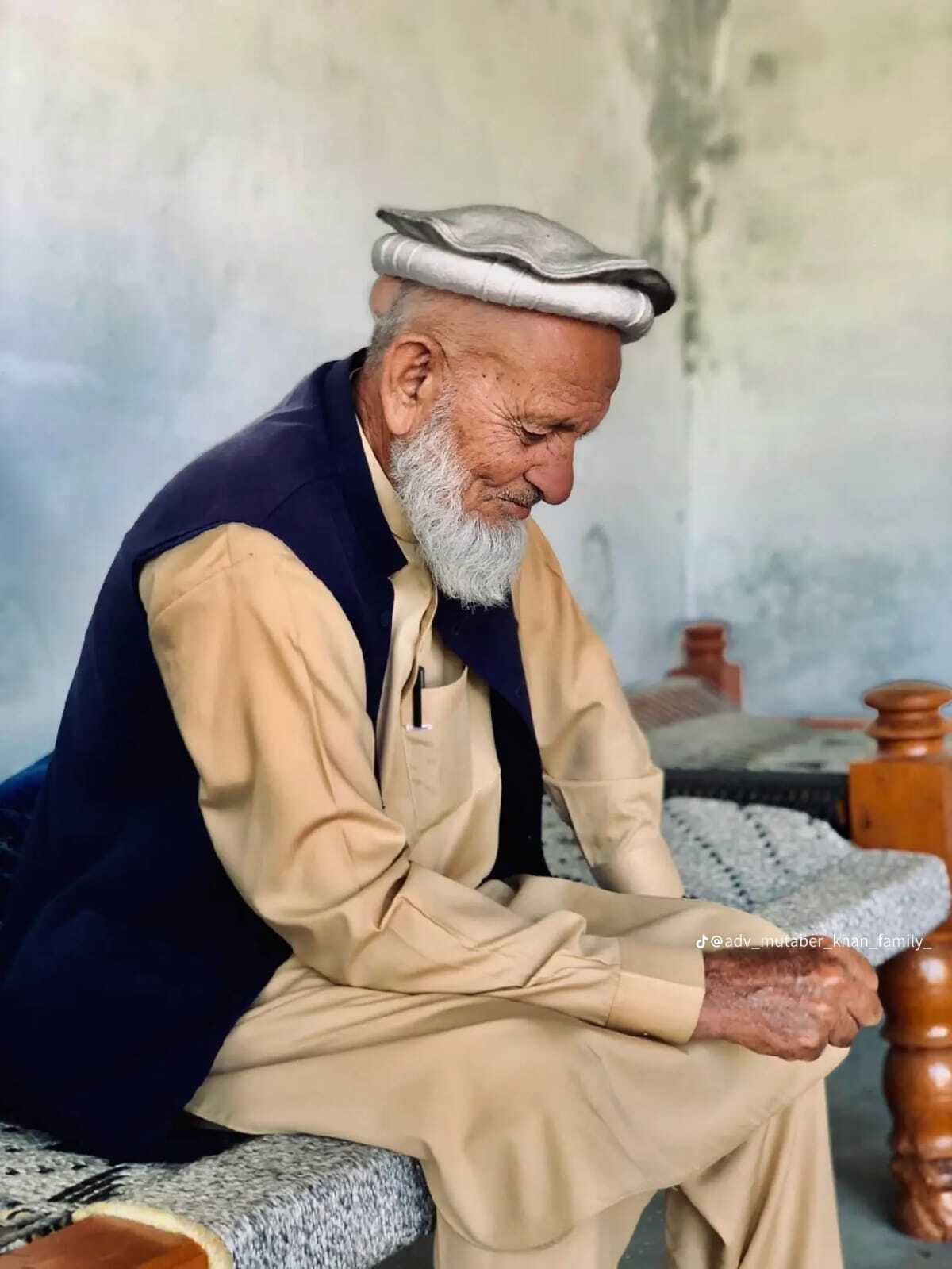
Jehan Zeb Khan of Sultanwas, Buner
A senior elder associated with the formation and organisation of the local Qaumi Lashkar alongside Abdur Rasheed Khan, coordination of community defence with police, and the preservation of family and village continuity through war and displacement.
Leadership in Defence and Continuity
Jehan Zeb Khan is remembered in the Sultanwas family and local oral historical record as one of the senior figures who helped organise the village response during the 2009 crisis. His authority rested on seniority, trust, land, consultation and the ability to bring people together in difficult circumstances.
When militant control threatened the village, those same qualities became central to organised community defence and to the long-term continuity of family and place.
Formation of the Local Qaumi Lashkar
According to the supplied family account, Jehan Zeb Khan and his younger brother Abdur Rasheed Khan were both closely involved in the formation and organisation of the local Qaumi Lashkar.
Jehan Zeb Khan helped mobilise elders, volunteers and residents through jirga consultation and collective responsibility, while Abdur Rasheed Khan became strongly associated with active civilian defence, public-facing resistance and later recognition. Together, their roles contributed to a more organised village response.
The local lashkar in Sultanwas is best understood as a jointly organised community effort in which both Jehan Zeb Khan and Abdur Rasheed Khan held important roles.
Cooperation with Police and Wider Resistance
The effort organised observation of roads and approaches, communication between households and the participation of local volunteers. Police personnel and other local anti-militant defenders coordinated with these community structures, and together they became part of the wider Qaumi Lashkar resistance against the Taliban.
This cooperation showed that the resistance was directed against militant domination while remaining connected to lawful authority and the need for wider security support.
War, Displacement and Village Continuity
When fighting intensified, families were displaced and homes were damaged. Jehan Zeb Khan’s role as a senior elder continued through the crisis by helping sustain family cohesion, attachment to ancestral land and confidence that the village would be restored.
This continuity formed part of the same leadership tradition that supported defence, coordination and recovery.
Brotherhood and Complementary Leadership
Jehan Zeb Khan was the elder brother of Abdur Rasheed Khan. Their contributions should be read together: Jehan Zeb Khan is remembered for senior guidance, mobilisation and continuity, while Abdur Rasheed Khan became especially visible through active defence, the White House, public advocacy and later national recognition.
The history of Sultanwas is stronger and more accurate when both brothers are recognised as part of one connected civic effort.
Enduring Legacy
His legacy includes Qaumi Lashkar organisation, cooperation with police, jirga-based mobilisation, stewardship of land and continuity through displacement.
The continued civic and legal presence of his descendants in Sultanwas reflects the long-term result of that leadership: a family and community that remained connected to place after war.
This record forms part of the Sultanwas family and community archive.