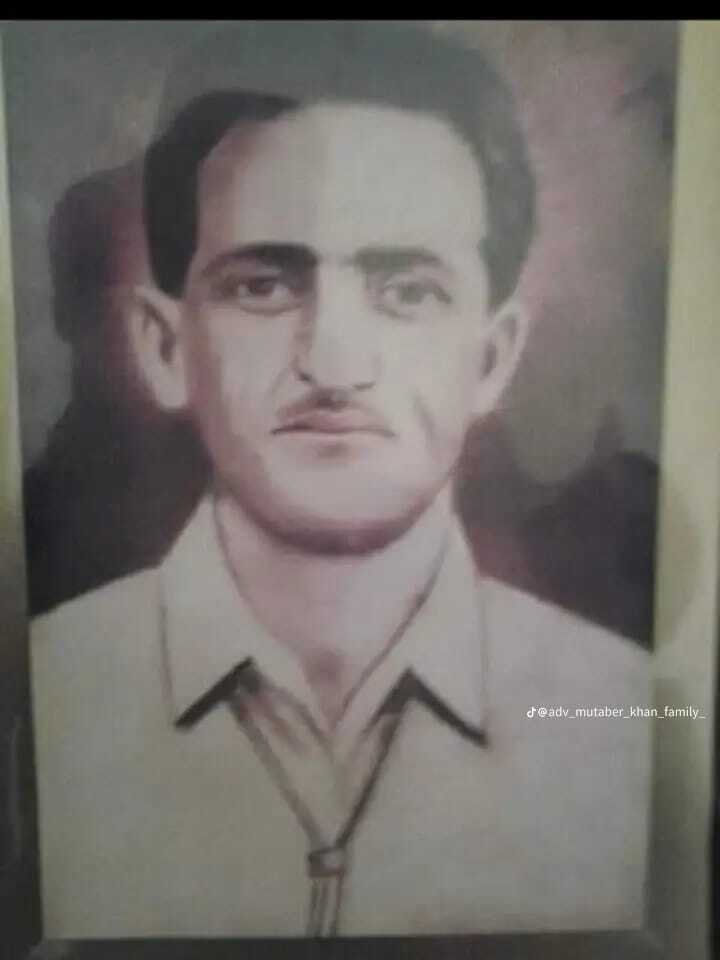
Nasim Khan of Sultanwas
A major landowner, educated elder, jirga leader and widely respected public figure whose influence connected Sultanwas with government, religious scholars and communities from Buner to Attock.
A Foundational Elder of Sultanwas
Nasim Khan belonged to the generation that carried public responsibility through personal reputation, land stewardship, courage and service. In Sultanwas he was remembered not simply as a wealthy landowner, but as a senior elder whose judgement influenced village affairs.
His authority was social rather than ceremonial. People approached him when disputes required settlement, when a jirga had to be led, when government offices or courts needed to be engaged, or when the village required a respected representative.
Education and Experience in Bombay
At a time when advanced travel and education were uncommon for many rural families, Nasim Khan went to Bombay, now Mumbai, for study and wider experience. The journey exposed him to a larger commercial and civic world.
He was also remembered as a respected figure among people from his region who worked there. When he returned to Sultanwas, that experience strengthened his confidence in dealing with officials, institutions and people beyond the village.
Jirga Leadership and Public Service
Nasim Khan led village jirgas, helped resolve land and personal disputes, and carried responsibility for matters involving courts and government departments. His relationships with officials, local union representatives and influential people helped the village communicate with institutions that were otherwise distant from ordinary residents.
His friendships and social connections reportedly extended from Buner to Attock. Such a network mattered in an era when personal trust often determined whether a petition was heard, a dispute was contained or a vulnerable family obtained assistance.
His influence was measured by the burdens he accepted for others: mediation, representation, protection and responsibility.
Protection, Bail and the Prevention of Further Conflict
Old rural society sometimes faced fatal incidents arising from land disputes, personal quarrels or cycles of retaliation. Family accounts remember Nasim Khan as a guarantor and mediator in such difficult cases.
When he provided bail, temporary protection or a place to stay, the purpose was not to celebrate violence or shelter deliberate wrongdoing. It was to prevent further bloodshed, bring people under recognised responsibility and create time for jirga, legal or governmental processes to work.
This role required courage. A guarantor placed his own name, standing and sometimes property behind the promise that a person would appear, obey conditions and avoid renewed conflict.
Religious Character and Relations with Ulema
Nasim Khan was remembered as a religious-minded man who maintained respectful relations with ulema and learned scholars. His public authority therefore joined customary Pashtun leadership with moral and religious responsibility.
These relationships helped reinforce reconciliation, restraint and community obligations, especially when legal, personal and religious questions overlapped.
Wealth as Responsibility
He was regarded as very wealthy by the standards of his time, with substantial land and resources. Yet the enduring family memory focuses less on possession than on what wealth allowed him to do: host people, support dependants, stand guarantee for others and carry village responsibilities.
His strength, courage and generosity made his household a point of reference in Sultanwas. The respect associated with him continued to shape how later generations of the family were viewed.
Death and Continuing Memory
Nasim Khan died in Ramadan 1973, one day before Eid. His exact birth year is not preserved with certainty, but family estimates place it between 1897 and 1900.
The family remembers his death with the honourific status of Shaheed. Because this is a family historical account, that status is presented as inherited memory rather than as a separately verified official classification.
His legacy survives in the civic traditions of his descendants: public responsibility, mediation, defence of Sultanwas, attachment to land and respect for community institutions.
This record forms part of the Sultanwas family and community archive.